Designing with Nature: A Guide to Using Seamless Tropical Plant and Flower Patterns
The allure of the tropics has long been a staple in graphic design, fashion, and interior decoration. There is something inherently uplifting about the lush greens of monstera leaves, the vibrant hues of hibiscus flowers, and the intricate textures of palm fronds. For designers, crafters, and business owners, capturing this aesthetic efficiently is often a challenge. This is where the concept of the seamless pattern becomes essential. Specifically, a curated collection featuring tropical plants and flowers offers a versatile foundation for countless creative projects.
Understanding how to utilize a floral vector pattern package is more than just downloading files; it is about grasping the technical and artistic principles that make these designs effective. Whether you are creating summer holiday templates, designing fabric for a new clothing line, or simply looking for high-quality wallpapers, knowing the ins and outs of seamless tropical patterns will elevate your work from amateur to professional.
What Makes a Pattern "Seamless"?
Before diving into specific applications, it is crucial to understand the terminology. A common misunderstanding among beginners is assuming that any repeating image is a seamless pattern. In reality, a true seamless pattern is a digital tile designed so that when it is repeated horizontally and vertically, the edges match perfectly without any visible seams, breaks, or misalignments.
This technical precision is what allows a single 3333 x 3333 pixel file to cover a billboard, a roll of fabric, or a website background without losing integrity. When working with organic subjects like tropical flora, achieving seamlessness is particularly difficult. Plants have irregular shapes and natural flow. A high-quality seamless pattern package ensures that a leaf crossing the right edge of the tile continues naturally on the left edge, maintaining the illusion of an infinite, living garden.
The Technical Advantage of Vector Formats
When evaluating a floral vector pattern package, the file format is just as important as the visual design. Professional packages typically include two distinct formats: .EPS and .JPG. Understanding the difference between these is vital for workflow efficiency.
The Power of .EPS Files
The .EPS (Encapsulated PostScript) format is the industry standard for vector graphics. Unlike raster images made of pixels, vectors are composed of mathematical paths. This means you can scale an EPS tropical plant pattern to the size of a postage stamp or the side of a building without ever experiencing pixelation or blurriness.
Furthermore, EPS files are editable. If you are using software like Adobe Illustrator or CorelDRAW, you can open the pattern and modify individual elements. You might want to change the color of a flower to match a specific brand palette, remove a specific leaf to create negative space, or rearrange elements to create a derivative design. This flexibility makes the affordable price point of such packages incredibly high-value, as you are not just buying a static image but a malleable design asset.
The Utility of High-Resolution JPGs
While vectors offer editability, .JPG files offer immediate usability. Included at a robust 3333 x 3333 pixel resolution, these raster versions are perfect for users who may not have vector editing software or who need a quick preview. This resolution is significant because it strikes a balance between file size and print quality. At 300 DPI (dots per inch), a 3333px square translates to roughly 11 inches by 11 inches of high-quality print area. For digital use, such as web backgrounds or social media cards, this resolution ensures crisp details even on high-density retina screens.
Practical Applications in Modern Design
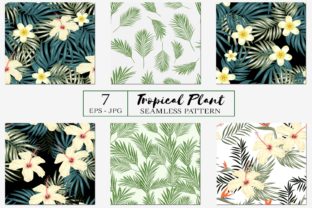
A package containing seven distinct seamless patterns of tropical flowers and plants provides a comprehensive toolkit. The variety ensures that you can maintain a cohesive theme across different mediums while avoiding visual repetition. Here is how these assets translate into real-world projects.
Fabric and Textile Design
The fashion and home decor industries rely heavily on seamless patterns. Tropical motifs are perennial favorites for resort wear, swimwear, and summer bedding. Because the patterns in this package are seamless, they can be sent directly to textile printers for yardage production. The ability to edit the EPS files allows designers to adjust the scale of the pattern relative to the garment; a large-scale monstera print might work beautifully on a maxi dress, while a smaller, denser floral arrangement might be better suited for a bikini or a throw pillow.
Stationery and Event Branding
Summer weddings, corporate retreats, and holiday parties often require themed stationery. Seamless tropical patterns serve as excellent backgrounds for invitation cards, menus, place cards, and thank-you notes. The key here is subtlety. A busy pattern can make text hard to read. By utilizing the vector format, designers can reduce the opacity of the pattern or change the colors to a softer pastel palette to ensure legibility while maintaining the tropical atmosphere.
Digital Wallpapers and Web Design
In the digital realm, seamless patterns are used to add texture and depth to flat interfaces. A tropical plant pattern can transform a sterile landing page into an immersive experience. For mobile and desktop wallpapers, the 3333 x 3333 pixel JPGs provide ample coverage. Designers can also use these patterns as overlays in video content or social media stories to create consistent branding for travel influencers, tourism boards, or lifestyle brands.
Maximizing Value and Creativity
One of the most compelling aspects of acquiring a bundled pattern package is the economic efficiency. Creating seven unique, high-quality seamless vector patterns from scratch requires significant time, artistic skill, and technical knowledge. Sourcing these elements individually can quickly become cost-prohibitive. By obtaining all vector elements at affordable prices through a package, creators can allocate their budget toward other aspects of their project, such as marketing or premium printing materials.
However, value is not just about cost; it is about creative potential. Beginners often feel intimidated by blank canvases. Having a library of pre-made, professional-grade assets serves as a creative catalyst. You do not have to draw every leaf from scratch to create something beautiful. Instead, you can focus on composition, typography, and layout, using the tropical patterns as a reliable foundation.
Tips for Working with Tropical Floral Vectors
To get the most out of your seamless pattern package, consider the following best practices:
- Check Color Modes: Ensure you are working in CMYK color mode if you intend to print your designs, and RGB for digital screens. Vector files allow for easy conversion between these modes without quality loss.
- Mind the Scale: Always test your pattern at the actual print size before finalizing. A pattern that looks sparse on a computer screen might look perfect when printed on fabric, or vice versa.
- Create Variations: Use the seven base patterns to generate dozens of variations. Rotate elements, mirror sections, or combine elements from different patterns to create something entirely unique to your brand.
- Respect Licensing: Always review the license agreement included with the package. While most affordable vector packages allow for commercial use in end products, they may restrict reselling the patterns themselves as standalone digital assets.
Conclusion
Seamless patterns featuring tropical plants and flowers are more than just decorative elements; they are fundamental building blocks of modern visual communication. They bridge the gap between natural beauty and digital precision, allowing creators to bring the warmth of the tropics into any medium. By understanding the technical benefits of EPS and JPG formats, recognizing the importance of true seamlessness, and exploring diverse applications from fabric to web design, you can unlock the full potential of these assets.
Whether you are a seasoned designer looking to streamline your workflow or a hobbyist embarking on your first summer craft project, a well-curated floral vector pattern package offers an accessible entry point into professional-grade design. With seven unique patterns and dual-format availability, you have the tools necessary to create vibrant, engaging, and technically sound designs that capture the endless summer spirit.