Patters with Watercolor Irises: Elevating Design Through Technical Precision
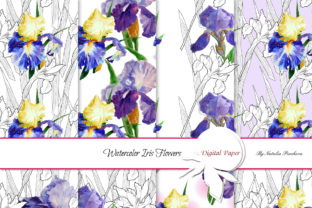
There is a distinct elegance to botanical illustration that digital filters simply cannot replicate. When designers and crafters seek out Patters with Watercolor Irises, they are usually looking for more than just a pretty flower; they are searching for the organic texture, pigment variation, and soft edges that convey genuine artistry. This specific collection of Watercolor Romantic Irises offers eight unique floral patterns designed to bridge the gap between traditional fine art and modern digital application. Whether you are creating wedding invitations, scrapbooking layouts, or commercial packaging, the appeal lies in the versatility of these hand-painted aesthetics adapted for high-resolution use.
However, acquiring high-quality assets is only half the battle. Many creators, from hobbyists to professional print manufacturers, inadvertently compromise their final output by misunderstanding how to handle watercolor-specific digital files. The transition from screen to substrate requires technical awareness. A pattern that looks vibrant on a backlit monitor can appear muddy on matte paper if not managed correctly. Understanding the nuances of this specific collection—including its 3600 x 3600 pixel dimensions and included vector options—is essential for achieving professional results without costly reprints or wasted time.
Respecting Resolution and Physical Scale
One of the most frequent errors when working with printable digital papers is assuming that "high resolution" applies universally to any project size. The Patters with Watercolor Irises collection provides files at 3600 x 3600 pixels with a density of 300 DPI. Mathematically, this translates to a pristine 12 x 12 inch print area. This is the industry standard for scrapbooking and many invitation formats, but it is not infinite.
A common mistake occurs when designers attempt to stretch these raster JPEGs beyond their native dimensions for large-format projects like gift wrap rolls or wall art. Unlike vector graphics, watercolor textures rely on specific brushstroke data. When you upscale a 300 DPI watercolor file by even 20%, the delicate pigment granulation begins to blur, and the crisp edges of the iris petals soften into digital artifacts. This degradation is often invisible on screen but becomes glaringly obvious once printed.
To avoid this, always design at a 1:1 scale relative to the source file. If your project requires a background larger than 12 inches, do not stretch the image. Instead, utilize the seamless nature of the pattern to tile it, or leverage the included EPS10 vector file. The vector component is specifically intended for scalability. While the JPEG captures the authentic watercolor texture, the vector allows for resizing without quality loss, making it the superior choice for manufacturing or large-format printing where the 12-inch limit is restrictive.
Navigating Color Profiles for Print Accuracy
Watercolor irises are prized for their subtle color gradients and translucent layering. These characteristics make them particularly sensitive to color profile mismatches. Digital files are typically created and viewed in RGB (Red, Green, Blue) color space, which uses light to create color. Commercial printing and most home printers, however, use CMYK (Cyan, Magenta, Yellow, Key/Black) ink. A frequent oversight is sending RGB watercolor patterns directly to a professional printer without conversion or consultation.
The result is often a shift in hue. Vibrant purples and soft blues in the Watercolor Romantic Irises may print darker or duller than anticipated because the printer cannot reproduce the full RGB gamut. For greeting cards and wedding invitations where color matching is critical, this discrepancy can be disappointing. Before committing to a full print run, perform a test print using the exact paper stock and printer settings intended for the final product. If you are outsourcing to a manufacturer, ask about their preferred color profile. Some modern digital presses handle RGB-to-CMYK conversion better than others, but verifying this beforehand prevents expensive surprises.
Understanding Seamless Tiling vs. Static Placement
When applying these elegant floral backgrounds, users sometimes treat the 12 x 12 inch canvas as a static poster rather than a repeating module. This limits the utility of the asset. True pattern design relies on seamlessness, meaning the left edge perfectly matches the right edge, and the top matches the bottom. If you place the Patters with Watercolor Irises file in the center of a larger document and leave white borders, you lose the immersive quality that makes watercolor patterns so effective for gift wrap and fabric design.
Conversely, improper tiling creates visible grid lines that disrupt the organic flow of the flowers. Before purchasing or downloading, zoom in on the preview images at 100% magnification to inspect the edges. High-quality patterns like this collection are engineered to repeat invisibly. In your design software, use the pattern fill tool rather than manually copying and pasting the image layer. Manual placement rarely achieves pixel-perfect alignment, leading to visible seams that detract from the romantic, fluid aesthetic of the irises. Utilizing the software’s native tiling function ensures the background remains continuous across any canvas size.
Leveraging the Vector File Correctly
The inclusion of an EPS10 vector file in this zip package is a significant value add, yet it is frequently underutilized or misused. Beginners often ignore the vector entirely, sticking to the familiar JPEGs. Professionals sometimes expect the vector to look identical to the watercolor painting, leading to confusion. It is vital to understand that vectors are mathematical paths, not pixel-based paintings. The EPS file provides crisp, scalable outlines and shapes derived from the original art, but it may lack the complex water bleeding and paper texture of the raster version.
Use the vector file strategically. It is ideal for die-cutting machines, laser engraving, or creating custom monograms where clean lines are necessary. It is also perfect for adjusting the color palette of the irises to match specific wedding themes or brand guidelines, which is nearly impossible to do cleanly with a flattened JPEG. However, for projects requiring the authentic hand-painted feel, such as vintage-style scrapbooking or textured stationery, the 300 DPI JPEG remains the primary asset. Recognizing the distinct purpose of each file type ensures you select the right tool for the specific task at hand.
Evaluating Licensing for Commercial Use
For entrepreneurs, marketers, and small business owners, the visual appeal of Watercolor Romantic Irises must be balanced with legal compliance. A dangerous assumption is that purchasing a digital download automatically grants unlimited commercial rights. Licensing terms vary significantly between marketplaces and individual artists. Before integrating these patterns into products for sale—such as printed greeting cards, physical gift wrap, or digital templates—you must verify the specific license included with the Patters with Watercolor Irises collection.
Check whether the license covers end-products versus digital redistribution. Typically, you can sell physical items featuring the pattern, but selling the digital file itself or including it in a competing digital kit is prohibited. Overlooking this detail can lead to copyright infringement claims or platform bans. Additionally, some licenses require attribution for certain uses. Reading the terms before starting your project saves you from having to redesign packaging or marketing materials later due to compliance issues. Responsible usage protects both your business reputation and the artist’s livelihood.
Optimizing Workflow for Mixed Media Projects
Finally, consider how these digital assets interact with physical media. Scrapbookers and card makers often combine digital prints with tangible embellishments. A practical error is printing the watercolor pattern on glossy photo paper when intending to write over it or apply adhesive. Glossy surfaces resist ink and glue, making the beautiful iris background functionally difficult to use. Matte or satin finish papers generally accept watercolor-style prints better and provide a surface texture that complements the organic nature of the design.
Furthermore, when designing invitations, ensure adequate contrast between the pattern and your typography. Watercolor irises can be visually busy. Placing dark text directly over detailed floral areas reduces readability. Create text boxes with solid or semi-transparent white backgrounds to ensure legibility while maintaining the floral ambiance. This simple adjustment respects both the aesthetic beauty of the pattern and the functional requirement of clear communication. By approaching Patters with Watercolor Irises with technical mindfulness and respect for the medium's limitations, creators can produce work that is as durable and professional as it is beautiful.