Leaf Pattern Colorful White Background: Versatile Vector Design for Modern Applications
The Strategic Advantage of Seamless Tropical Vectors in Visual Communication
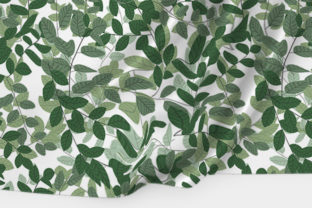
In the expansive world of graphic resources, few elements possess the universal appeal and functional versatility of a well-crafted leaf pattern colorful white background. This specific design category bridges the gap between organic naturalism and structured digital utility. When designers select vectors featuring turquoise and green tropical leaves against a pristine white canvas, they are not merely choosing a decoration; they are selecting a foundational asset that communicates freshness, vitality, and exotic elegance. The choice of a white background is particularly strategic in professional design workflows. Unlike dark or busy backgrounds, white provides maximum contrast and flexibility, allowing the vibrant greens, teals, and realistic palm silhouettes to serve as either a dominant focal point or a subtle textural underlay without competing with foreground content.
The technical nature of these assets as vectors further amplifies their value. Whether depicting a detailed monstera, a sweeping banana leaf, or an abstract hibiscus arrangement, vector graphics maintain infinite scalability. This ensures that the crisp edges of a seamless jungle illustration remain sharp whether printed on a small product tag or stretched across a large-format wall mural. For professionals in fashion, interior design, and packaging, this scalability eliminates the need for multiple file resolutions, streamlining the production process from concept to final print. The integration of keywords like Hawaii, aloha, and tropics into the visual language of these patterns triggers immediate psychological associations with relaxation, heat, and summer, making them indispensable for seasonal campaigns and lifestyle branding.
Material Science and Print Production Considerations
Understanding the physical application of these digital assets requires knowledge of material interaction. A leaf pattern colorful white background behaves differently depending on the substrate. In fabric design, particularly for boho or botanic fashion lines, the white base allows for accurate color reproduction of teal and green hues during sublimation or screen printing. The negative space in the pattern acts as a breathing room, preventing the design from appearing visually heavy when draped over clothing or upholstery. For wrapping paper and packaging materials, the seamless nature of the graphic is non-negotiable. Designers must ensure that the repeat tile aligns perfectly so that the transition between one palm frond and the next is invisible to the consumer. This continuity creates a premium perception of quality, suggesting that the brand has invested in high-grade graphic resources rather than generic, disjointed clip art.
Furthermore, the density of the foliage in these illustrations dictates their suitability for different media. High-density rainforest patterns with overlapping beak-like leaves and dense greenery work exceptionally well for immersive wallpapers and large surface areas where the eye can get lost in the complexity. Conversely, sparse arrangements with ample white space are superior for stationery, business cards, and digital interfaces where readability is paramount. The realistic rendering of veins and textures in modern vector art adds a tactile dimension to flat prints, simulating the feel of actual plant matter through visual cues alone. This interplay between digital precision and organic imperfection is what elevates a simple floral print to a sophisticated piece of commercial art.
Cross-Industry Implementation Strategies
- Fashion and Textile Design: Utilizing abstract palm and hibiscus motifs to create resort wear collections. The white background serves as a neutral base that highlights the vibrancy of turquoise and emerald dyes, appealing to consumers seeking the "aloha" aesthetic without cliché overload.
- Interior Decoration and Wallpaper: Applying seamless jungle vectors to accent walls in hospitality spaces. The realistic leaf details cast visual shadows that add depth to rooms, while the white background keeps interiors feeling airy and open despite the bold botanical theme.
- Packaging and Branding: Employing stylized greenery and stripe variations on eco-friendly product boxes. The association between nature imagery and sustainability helps communicate brand values instantly, with the clean white background ensuring regulatory text remains legible.
- Digital Media and Web Design: Using lightweight vector versions of tropical patterns as website headers or app backgrounds. The scalable nature ensures fast load times compared to raster images, while the colorful yet organized composition guides user attention effectively.
- Event Stationery and Invitations: Incorporating exotic flora and silhouette elements into wedding and party suites. The versatility of the vector format allows for easy customization of colors to match specific event palettes while retaining the structural integrity of the original leaf design.
Navigating Aesthetic Trends: From Realistic to Abstract
Current design trends show a bifurcation in how tropical motifs are consumed, and a comprehensive leaf pattern colorful white background collection should address both ends of the spectrum. On one side, there is a sustained demand for hyper-realistic botanic illustrations. These designs focus on scientific accuracy, capturing the specific morphology of monstera deliciosa, ferns, and palm species. This style appeals to educators, researchers, and high-end decor markets that value authenticity and educational merit. The realistic approach often utilizes subtle gradients and shadow effects within the vector paths to mimic the way light interacts with waxy leaf surfaces, creating a sense of three-dimensionality that rivals photography.
On the opposite end lies the abstract and geometric interpretation of tropical themes. Here, the essence of the jungle is distilled into shapes, stripes, and color blocks. Turquoise and green are used not just as representational colors but as emotional signifiers of coolness and growth. Abstract vectors allow for greater creative freedom in fashion and modern art contexts, where the suggestion of a leaf is more powerful than its literal depiction. These designs often play with scale and repetition, turning organic forms into rhythmic patterns that function similarly to traditional textiles or tessellations. Understanding which stylistic approach suits a specific project is crucial for designers; a spa might prefer the calming abstraction of flowing lines, while a botanical garden gift shop would benefit from the identifiable specificity of realistic plant portraits.
Technical Optimization and Asset Management
For creators and business owners managing libraries of graphic resources, organization and optimization are key to leveraging these assets effectively. When working with files tagged with keywords like creature, kit, material, and graphic, it is essential to maintain metadata integrity. Proper tagging ensures that when a designer searches for "seamless Hawaiian floral," the relevant vector appears immediately. Beyond organization, technical preparation involves checking anchor points and path complexity. Overly complex vectors with thousands of nodes can cause rendering issues in certain software or slow down web performance. Optimizing these files by simplifying paths without sacrificing visual detail is a best practice that enhances usability across platforms.
Color management is another critical consideration. While the screen may display a vibrant neon green, print output depends heavily on color profiles. Professional designers must convert RGB vector files to CMYK before sending them to press to avoid muddy results, especially with the tricky cyan and yellow mixtures found in tropical teal shades. Additionally, understanding the licensing of these vectors protects businesses from legal pitfalls. Whether the asset is part of a larger kit or a standalone purchase, verifying commercial usage rights for wrapping, fabric, or digital redistribution is mandatory. The most successful projects are those where artistic vision is supported by rigorous technical and legal due diligence, ensuring the final product is as durable as it is beautiful.
The Psychological Impact of Biophilic Design Elements
The enduring popularity of the leaf pattern colorful white background extends beyond mere aesthetics; it is rooted in biophilia, the innate human tendency to seek connections with nature. In urban environments and digital spaces devoid of organic life, these vectors serve as proxies for the natural world. Research in environmental psychology suggests that exposure to images of nature, even stylized ones, can reduce stress and improve cognitive function. This explains why healthcare facilities, corporate offices, and wellness brands frequently utilize greenery and floral motifs in their environmental graphics. The white background plays a supportive role here, providing a sense of cleanliness and order that prevents the natural imagery from feeling chaotic or overgrown.
Moreover, the cultural resonance of terms like Hawaii, tropics, and rainforest imbues these patterns with narrative weight. They tell stories of distant places, adventures, and ecological richness. When a consumer engages with a product featuring these designs, they are participating in a form of visual escapism. For marketers and educators, this narrative potential is a powerful tool. A textbook on ecology becomes more engaging with accurate leaf illustrations; a travel brochure becomes more persuasive with vibrant palm silhouettes. The vector format allows these stories to be told consistently across touchpoints, reinforcing brand identity and thematic coherence. Ultimately, the fusion of artistic beauty, technical precision, and psychological relevance makes these graphic resources indispensable in contemporary visual culture.